

Lonnie Mack: The Underrated Blues Rock Pioneer
Lonnie Mack is one of the most important and influential guitarists in the history of blues rock, yet his name is far too often left out of conversations about the genre’s greatest innovators. While guitar giants like Stevie Ray Vaughan, Duane Allman, Jeff Beck, and Eric Clapton are regularly praised for shaping the sound of electric blues, many of their breakthroughs trace back to a man from Indiana who helped ignite the entire movement. Lonnie Mack’s fusion of blues, soul, country, and early rock created the blueprint for the blues rock explosion that would follow in the 1960s and 1970s. His playing was fiery, emotional, and daring at a time when rock guitar was still in its infancy. He was a pioneer whose contributions echo through generations of musicians.
Despite his influence, Mack never received the level of recognition his work deserved. His career did not follow the same commercial trajectory as many of the legends he inspired. He had periods of silence, long stretches away from the spotlight, and battles with the music industry. Yet the music he left behind tells the story of a true innovator, a guitarist who helped define the vocabulary of electric blues rock at a time when few people were even imagining such sounds.
To understand why Lonnie Mack remains one of the most underrated pioneers in blues rock history, one must explore his groundbreaking recordings, his fearless approach to guitar playing, his influence on future icons, and the artistic journey that kept him both inside and outside the public eye.
Early Beginnings: The Roots of a Revolutionary Guitarist
Born Lonnie McIntosh in 1941 in southeastern Indiana, Mack grew up in an environment where musical traditions collided. Country, gospel, rhythm and blues, and early rock and roll were all part of the regional soundscape. This mixture would go on to shape his unique musical identity. His influences ranged from Merle Travis to Les Paul, from T Bone Walker to Robert Ward. He absorbed everything. His family’s radio, powered by a truck battery, became his musical classroom. He learned chords from his mother and soon began performing in the family bluegrass band.
By 13, Mack was playing professionally. He quit school and followed the sound of guitars into roadhouses and juke joints. His early exposure to diverse genres built the foundation of the fusion that would become his signature. He blended country fingerstyle picking with blues phrasing, gospel emotion, and the rhythmic pulse of early R and B. He was not copying styles. He was merging them into something new.
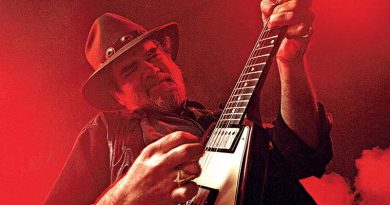
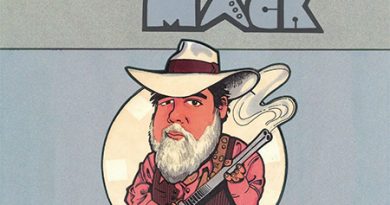
The next turning point came when Mack acquired a cherry red Gibson Flying V prototype in 1958. Most players of the time avoided the V because of its unusual shape, but Mack saw its potential. The instrument allowed easier access to higher frets and offered a powerful, resonant tone that cut through any mix. Paired with a Magnatone amp rich in vibrato, his sound became instantly recognizable.
Session Work and the Birth of a New Sound
By the early 1960s, Mack had become an in-demand session guitarist at King Records in Cincinnati. He played behind artists like Hank Ballard, Freddie King, and James Brown, gaining valuable experience and sharpening his instincts. The work exposed him to a wide array of musical styles, each of which shaped his approach to the guitar.
But it was a spontaneous moment in 1963 that would change everything. After finishing a recording session for a female vocal trio, Mack was offered 20 minutes of leftover studio time. He seized the opportunity. With no rehearsal and no grand plan, he tore into an instrumental version of Chuck Berry’s “Memphis, Tennessee.” He recorded the track quickly, unaware that he had just altered the trajectory of guitar music.
When “Memphis” was released later that year, simply titled “Memphis,” it became a national hit. It sold over a million copies and reached number five on the Billboard pop chart. The song featured blistering single-string runs, vocal-like bends, and expressive vibrato. It demonstrated that the electric guitar could serve as a lead instrument capable of carrying melodic responsibility. It was, in many ways, the birth of the modern guitar solo.
“Wham!” and the Foundation of Blues Rock Guitar
Mack followed “Memphis” with another groundbreaking instrumental, “Wham!” This track pushed his experimentation with the Bigsby tremolo to new extremes. The controlled chaos of the dives and swoops helped popularize a technique that guitarists still emulate today. Many believe “Wham!” directly inspired the term “whammy bar” that became synonymous with tremolo arms.
In these tracks, Mack fused the emotional depth of the blues with the attitude of rock and the drive of R&B. He created what would become blues rock long before the genre had a name. In 1964, the release of his album The Wham of That Memphis Man! cemented his status as a groundbreaking artist. The album showcased both instrumental virtuosity and powerful, soulful vocals. His singing often surprises those who know him primarily as a guitarist. His voice carried the raw emotional force of gospel and the stylistic edge of Southern soul.
This album remains one of the most important early landmarks in electric blues and rock guitar.
A Pioneer Overshadowed by the British Invasion
In a twist of fate, Mack’s innovation indirectly fueled a movement that would overshadow him. As the British blues explosion took shape in the mid-1960s, guitarists on the other side of the Atlantic began using techniques Mack had already introduced. British players often received widespread commercial attention, while Mack stayed tied to smaller labels and inconsistent industry support.
Artists such as Eric Clapton, Jeff Beck, Jimmy Page, and Keith Richards drew from the sonic vocabulary that Mack helped create. Their success, on major labels and with massive promotional backing, brought guitar-driven blues rock to global audiences. Yet the man who had played a significant role in shaping the sound remained largely under the radar.
Mack’s career was further complicated by his preference for independence. He was not interested in chasing trends or riding waves of commercial attention. He valued authenticity over fame. These choices gave him creative freedom, but also limited his exposure.
The Elektra Years: Songwriting, Experimentation, and Evolution
Mack’s artistic journey continued with a series of albums for Elektra Records in the late 1960s and early 1970s. While not major commercial successes, these records showcased his growth as a songwriter and his willingness to explore new directions. Albums like Whatever’s Right, Glad I’m in the Band, and The Hills of Indiana blended genres with ease, revealing Mack’s multi-dimensional artistry.
He contributed bass parts to The Doors’ Morrison Hotel, demonstrating his versatility and adaptability. Even during quieter stretches, Mack was never far from meaningful musical contributions.
But the Elektra years also highlighted a pattern that would follow him throughout his career. Just as momentum began to build, Mack would step back. He spent part of the 1970s running a campground in Indiana, hosting informal gatherings where bikers, hippies, and music lovers shared barbecue and guitars. It was a joyful period, until an altercation with an off-duty police officer resulted in Mack being shot. The incident disrupted his life and pushed him into another period of movement and soul-searching.
Mentorship, Friendship, and Revival With Stevie Ray Vaughan
In the early 1980s, Lonnie Mack found a powerful ally in Stevie Ray Vaughan. Vaughan had grown up idolizing Mack and saw him as a direct line to the past while also embodying the energy of the future. The two developed a deep mutual respect. Vaughan encouraged Mack to return to the studio, ultimately co-producing the 1985 album Strike Like Lightning for Alligator Records.
The album was a triumph. It brought Mack widespread critical acclaim and reintroduced him to blues audiences around the world. The supporting tour featured guest appearances from Keith Richards, Ronnie Wood, Ry Cooder, and others who admired Mack’s legacy. He also performed at Carnegie Hall in a blues summit alongside Albert Collins and Roy Buchanan.
This revival highlighted the powerful ripple effect of Mack’s influence and proved he still played with the fire and conviction that had defined his early career.
Throughout the late 1980s and early 1990s, Mack continued to perform and record. His live album Lonnie Mack Live: Attack of the Killer V captured the intensity of his concerts, showcasing the same bold tone and emotional delivery that had electrified listeners decades earlier.
Why Lonnie Mack Remains Underrated
Despite his massive influence, Lonnie Mack never achieved the widespread recognition of the guitar heroes who followed him. There are several key reasons for this.
He was ahead of his time. His innovations preceded the blues rock boom by years, and when younger artists popularized the style, they became the public faces of the movement. Mack also had a complicated relationship with the music industry. He resisted commercialization and valued artistic independence. This limited the promotional support behind his work.
Additionally, he was a musical shapeshifter. His combination of blues, country, soul, and gospel made him difficult to categorize. Record labels struggled to market an artist who transcended genre lines. Most importantly, Mack repeatedly stepped away from the spotlight. While others toured aggressively and sought mainstream success, he often chose quiet periods of reflection.
Yet none of these reasons diminishes the significance of his contributions.
A Legacy Renewed: Lonnie Mack’s Influence Lives On
Lonnie Mack’s impact on blues rock remains as powerful today as it was when he first electrified listeners in the early 1960s. His fearless technique, emotional phrasing, and genre-blending vision helped create the vocabulary of modern electric blues. His innovations shaped generations of guitarists who learned from his recordings even if they never fully knew the source.
In recent years, Mack’s legacy has begun receiving renewed attention, and 2025 brought one of the most significant celebrations of his work. Lonnie Mack: Live in Louisville 1992 was released in double black vinyl, CD, and digital formats through UK-based Last Music Co. It marked the first commercial release of Mack’s music since his passing in 2016 and offered fans a rare window into his live brilliance.
The performance was recorded on July 23, 1992, when Mack stepped in as a last-minute replacement at the Kentucky Center for the Arts in Louisville. The show had been broadcast live at the time, but the tape sat unheard for decades. Its rediscovery and restoration revealed Mack in peak form, delivering a set filled with fire, soul, and the genre-blending energy that defined his career. Backed by drummer Jeff McAllister, keyboardist Denzil “Dumpy” Rice, and bassist Bucky Lindsey, Mack delivered seven tracks that showcased the full range of his artistry.
Four songs in the set, including the high-energy pairing of “Camp Washington Chili” and “If You Have to Know” and the crowd-pleasing “Satisfy Susie,” came from his 1990 album Lonnie Mack Live: Attack of the Killer V, the final album released during his lifetime. The acoustic performance of “Oreo Cookie Blues” highlighted his charm and humor, while “Tough On Me, Tough On You” echoed the sound of his early 1970s Elektra era. The concert also featured a medley of “Memphis” and “Wham!,” the two groundbreaking singles that launched his career in 1963 and helped redefine rock guitar soloing for generations.
The Louisville Courier-Journal described Mack’s performance that night as “an evening of amazing chops, deep blues and percolating grooves,” adding that his playing sounded “1963 fresh.” The release of Live in Louisville 1992 confirms that assessment. Even decades into his career, Mack remained a fearless player with a tone and touch that were instantly recognizable.
The new release also underscores how deeply he influenced the artists who followed him. Mack once said, “What you do in this business, your whole thing is giving stuff away. But that makes you feel good; makes you feel like you’ve really done something.” His influence continues to ripple outward.
A Pioneer Who Finally Gets His Due
Lonnie Mack was a trailblazer whose groundbreaking innovations paved the way for modern blues rock. He revolutionized the electric guitar before most of the genre’s biggest names ever stepped into a studio. He blended country, gospel, R and B, and blues into a sound that influenced Stevie Ray Vaughan, Jeff Beck, Eric Clapton, Duane Allman, Neil Young, Dickey Betts, and countless others. His voice carried the power of a soul singer. His guitar playing changed the future of popular music.
The release of Lonnie Mack: Live in Louisville 1992 brings well-deserved attention back to a musician who helped shape the language of blues rock. It shines a light on a pioneer whose influence should be celebrated as widely as the artists he inspired.
Lonnie Mack may have been underrated during his lifetime, but his legacy is undeniable. He was a visionary, a boundary-breaker, and one of the most important forces in the history of blues rock guitar. His music remains timeless, his innovations continue to resonate, and his pioneering spirit lives on in every expressive bend and soulful solo played today.

How about Tinsley Ellis?
Dad actually painted his guitar that red color after it was a few other colors before he settled on the red.
My favorite track of his was always “Natural Disaster”. A fantastic, hard-rocking tune that let him really rip.
Had the honor of seeing him at a small club in Tampa during the early 90s. He was definitely a musician schooled in roadhouses. This is a compliment. Roadhouse musicians during his day had to play a variety of of genres and be ready switch gears at a moment’s notice. It seemed he was pulling songs out of his back pocket – blues, country, rock and soul ran through each song. His V was called #5, the 5th one off the line. I’ve seen many, many shows but that one ranks among the best. The story above is accurate, it’s no exaggeration considering him a legend.
Saw Lonnie Mack, Many Times At Center Street Blues Cafe In Mishawaka In. ALso In South
Bend In. And The Chicago Blues Festival &
Star Plaza In Merriville In. Got Some Good
Photos Of Lonnie With The Flying V and
The Acoustic Guitar Oreo Cookie Blues 🍪
In almost all the lists of best rock guitar players, I never see his name; it’s puzzling. He was the gu to beatuntil Jeff Beck came a long. That first album was reissued ten times and is the blueprint for souther Rock in my opinion. I saw the original band in fall of 1963 and told myself, “I want to do that!” He should be in the RRHOF. Bert Berns and Al Kooper finally made it, so there’s hope.