

Three Years Without Jeff Beck: Why His Guitar Still Matters
Three years after Jeff Beck’s death, his absence still feels strange. Not because his music has faded, but because his influence never slowed down long enough to become a historical footnote. Beck did not belong to a single era, scene, or movement. He belonged to the guitar itself. Long after trends shifted and genres fractured, Jeff Beck remained a constant reference point for what expressive, fearless guitar playing could be.
At Blues Rock Review, Jeff Beck occupies a unique place. He was never a straight blues guitarist in the traditional sense, yet blues was always at the center of his playing. He stretched it, distorted it, fused it with jazz, funk, rock, and electronic textures, but he never disconnected from feel. Beck’s legacy is not built on chart dominance or radio singles. It is built on respect, curiosity, and an uncompromising commitment to sound.
The Yardbirds and the First Spark of Something Different
Jeff Beck first made waves in the mid-1960s with The Yardbirds, stepping into a band that had already featured Eric Clapton and would later include Jimmy Page. That alone places Beck in rare company, but even then, he stood apart. Where Clapton honored blues tradition and Page would later lean into structured power, Beck brought volatility.
His playing with The Yardbirds hinted at what was to come. He embraced feedback, distortion, and sustain at a time when those elements were still being treated as mistakes rather than tools. Tracks like “Heart Full of Soul” and “Shapes of Things” showcased a guitarist who was already thinking in terms of texture and atmosphere, not just solos.
Beck’s stint with The Yardbirds was brief, but it was revealing. He was not built to stay in one lane or one band. That impatience with comfort would define his entire career.
The Jeff Beck Group and the Birth of Heavy Blues Rock
When Beck formed The Jeff Beck Group, he helped push blues rock into heavier territory. With Rod Stewart on vocals and Ronnie Wood on bass, the band delivered a raw, aggressive sound that would influence countless artists. Albums like Truth and Beck-Ola are now recognized as cornerstones of heavy blues rock, laying groundwork for hard rock and early metal.
These records were loud, gritty, and confrontational. Beck’s guitar tone was thick and unapologetic, yet his playing remained rooted in feel. He did not overwhelm songs with speed. Instead, he let riffs grind, notes ring, and space do its work. Many guitarists still cite this era as proof that power does not require excess.
And yet, just as momentum built, Beck moved on again. For him, success was never a reason to stop searching.
Choosing Exploration Over Stardom
One of the most defining moments of Jeff Beck’s career came in the 1970s when he turned away from traditional band formats and vocals to pursue instrumental music. At a time when rock heroes were becoming larger-than-life frontmen, Beck made a move that confused some fans but ultimately solidified his artistic legacy.
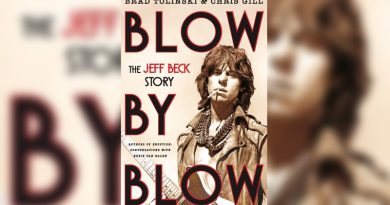
Albums like Blow by Blow and Wired reframed what a guitar-led album could be. Beck did not treat the guitar as a flashy centerpiece. He treated it as a voice. His phrasing became lyrical, conversational, and deeply expressive. Working with producer George Martin, Beck crafted records that were sophisticated without being sterile and technical without losing soul.
These albums became essential listening not just for guitarists, but for anyone interested in the evolution of instrumental music. They showed that emotion did not require lyrics, only intention.
Touch, Tone, and the Human Voice of the Guitar
Ask musicians what truly separated Jeff Beck from his peers, and most will point to touch. Beck’s command of dynamics, vibrato, and tone bordered on unreal. He famously abandoned the pick for fingerstyle playing, gaining a level of control that allowed him to shape every note with precision.
His use of the tremolo arm was equally distinctive. Beck did not rely on it for theatrics. Instead, he used it as part of his phrasing, bending pitch in subtle, vocal-like ways. Combined with volume swells and harmonic manipulation, his Stratocaster became less an instrument and more an extension of his hands.
In an era where speed and technique were often celebrated above all else, Beck quietly reminded listeners that feel is the final measure. One note from Beck could say more than a flurry of runs from someone else.
Refusing to Stay in One Genre
Jeff Beck never accepted genre limitations. Over the decades, his music absorbed jazz fusion, funk, electronica, and experimental rock. Albums such as There & Back, Guitar Shop, and Who Else! show a guitarist constantly absorbing new sounds without abandoning his identity.
What separated Beck from many crossover artists was commitment. He did not flirt with styles. He immersed himself in them. He collaborated with electronic musicians, experimented with modern production, and allowed technology to reshape his sound while keeping the guitar at the center.
This willingness to evolve kept Beck from becoming a legacy act. Even late in his career, his music sounded current, challenging, and alive.
Influence Without Imitation
Jeff Beck’s influence is everywhere, though it is not always obvious. Countless guitarists across blues, rock, and fusion credit him as a primary inspiration. Yet few tried to copy him outright. Beck’s impact was philosophical as much as musical.
He encouraged players to value individuality, to listen closely, and to treat tone as a personal signature. His career demonstrated that the guitar could be endlessly expressive without relying on formulas. That lesson continues to resonate with younger generations discovering his work for the first time.
Recognition Earned, Not Chased
Jeff Beck accumulated awards, including multiple Grammys, and earned dual induction into the Rock and Roll Hall of Fame. Yet accolades were never the point. Beck’s true validation came from his peers. Fellow musicians consistently described him as humble, curious, and generous, a master who never stopped learning.
That attitude carried into his collaborations and live performances. Beck approached the stage as a place of exploration, not repetition. Every show carried risk, and that risk is part of why audiences remained captivated.
Playing Until the Very End
Jeff Beck continued to perform and record until his final years, maintaining a level of intensity that stunned audiences. His live shows were studies in dynamics, restraint, and surprise. He never played songs the same way twice, and he never relied on nostalgia to carry a set.
For many fans, seeing Beck live late in his career felt like witnessing a master still asking questions, still experimenting, still pushing himself.
Why Jeff Beck Still Matters
Three years on, Jeff Beck’s legacy feels unusually alive. His music does not belong to a closed chapter of rock history. It continues to challenge guitarists to think differently about sound, touch, and expression.
Jeff Beck proved that blues-based music could evolve without losing its soul. He showed that technical mastery means nothing without emotion. And he demonstrated that the most important career choice an artist can make is to stay curious.
Jeff Beck did not just change how the guitar was played. He changed how it was understood. That is why, three years later, his influence is not fading. It is still shaping the future of blues rock, one bent note at a time.


Good article. Spot on description of JB and his influence on music past and present.