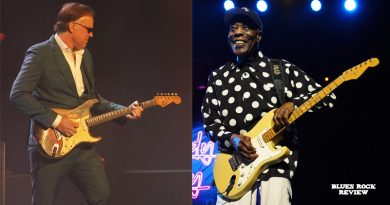

Joe Bonamassa sounds off on AI and the mysterious AI blues artist on the Billboard charts
Joe Bonamassa has weighed in on one of the biggest debates currently facing the music industry: the growing use of artificial intelligence and what it means for working musicians.
During a recent interview with Blues Rock Review at Eric Clapton’s Crossroads Guitar Festival in Austin, Bonamassa was asked about AI’s impact on music. The conversation quickly turned to Eddie Dalton, an artist whose presence on the Billboard blues charts has raised questions within the blues community.
“Do you know who Eddie Dalton is?” Bonamassa asked.
Bonamassa said, “Never seen him play live, never met him.”
“He’s a legitimate artist in the eyes of some,” Bonamassa added.
But Bonamassa also made it clear that listeners ultimately have the right to decide what they want to hear.
“The fans will respond to what they respond to,” he said. “The reality of it is this: when people want to zone out, and they want to put music on in the car, if they like AI music, that’s 100% their right. There’s nothing wrong with that. If they want to put on a Marcus King record, if they want to put on an Eric Gales record or whoever, that’s their right.”
His concern is less about telling listeners what they should enjoy and more about whether AI-generated projects should compete directly with living musicians.
“Whatever they particularly enjoy, that’s 100%. This is a supply and demand business,” Bonamassa said. “Should those artists be in the same category as living people out there? No. That’s a horrible thing.”
Bonamassa believes AI use is already considerably more widespread within the music industry than some musicians may be willing to acknowledge publicly.
“Everybody’s on the honor system,” he said, pointing to artists being called out for using AI to assist with lyrics and other parts of the creative process.
Bonamassa acknowledged the rising popularity of SUNO, which is being used to create songs through AI while at the same time understanding the entertainment business.
“If someone uses SUNO to write a lyric, okay, it’s not a high crime, a misdemeanor,” he said, adding that he personally has never used it.
What he does reject is the idea that musicians can simply pretend AI has not become part of the industry.
“Unless you’re living under a rock, now, do I think, do I hear it in some music? Absolutely. Did I just listen to 200 blues records and heard it a few times? Absolutely.”
Bonamassa believes the pressure to get noticed makes AI particularly tempting for emerging artists. In an industry dominated by social media, streaming platforms and constant competition for attention, he argued that some musicians will use whatever tools are available if they believe those tools can advance their careers.
“If I can use this program to get a leg up and maybe I get a few more people out of my show, you know that’s happening,” Bonamassa said. “We’d be very remiss to just bury our head in the sand, say it’s not, because it is.”
Despite the rapidly changing technology surrounding music, Bonamassa’s broader philosophy remains rooted in something far more traditional: the ability to perform.
As AI-generated music becomes increasingly difficult to separate from human-created recordings, Bonamassa’s comments highlight a distinction that could become increasingly important: creating something that sounds convincing is one thing. Walking onto a stage and convincing an audience is another.
Watch the full interview with Joe Bonamassa below.