Bruce Cockburn: The Blood of Others Review
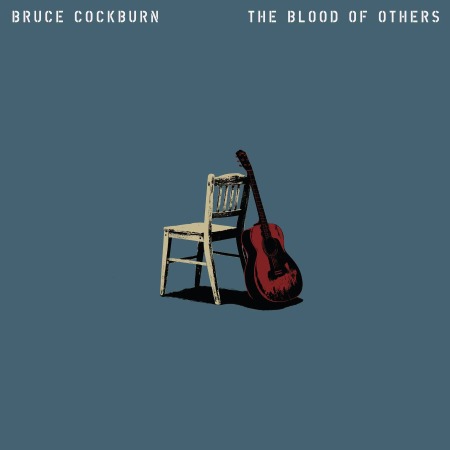
At this point in Bruce Cockburn’s discography, spanning over half a century of performing and recording, he has released over forty albums, including live recordings and compilations. The Blood of Others is his first studio album since the 2023 release O Sun O Moon and comprises fifteen covers of songs that Cockburn has carried in his memory since his earliest recollections of music. It was the music of his childhood and adolescence that influenced his musical direction once he decided to embark on a music career.
The album’s title was taken from a novel written by French author Simone de Beauvoir during the Nazi occupation of France during WWII. Bruce felt that borrowing the book’s title for his album made sense to him: “it seems perfect for an album of songs I didn’t write.” At 81 years of age, he felt that interpreting the songs that influenced him would be an important addition to his musical legacy. The album was produced by Colin Linden, who has collaborated with Cockburn for decades, and released through Sunset Boulevard Records.
The first cut is “I Wish I Was in Heaven Sitting Down,” a gospel blues song originally recorded by Rev. Robert Wilkins, who learned the song in 1911 when he was just 9 years old. Cockburn first heard the song in the 1970s on a compilation album that Wilkins recorded in 1965 during the 1960s folk revival, when he was rediscovered. “As Time Goes By” was written by Herman Hupfeld in 1931 and recorded by Rudy Vallee. The song was sung by Dooley Wilson in the 1942 film Casablanca and reached #2 on the Billboard chart. Cockburn’s version is accompanied by sparse acoustic guitar work rather than piano or a big band.
“Buddy Bolden’s Blues” was written by Jelly Roll Morton about the pioneer of New Orleans ragtime jazz. It’s a bright, happy tune that has Cockburn’s fingers dancing on the strings. “You Belong to Me” was a childhood memory for Bruce that he first heard in the early 1950s. The tune was a popular ballad that became a radio hit and was beautifully sung by Jo Stafford. Classic lyrics like “See the pyramids along the Nile” grab you with his raspy interpretation and multiple-guitar accompaniment. “That’s All Right” was originally written and recorded by Arthur “Big Boy” Crudup in 1946. Elvis Presley made the song famous when he recorded and released his version in 1954 as his debut commercial single. Scotty Moore’s guitar work on the recording prompted Bruce to use his resonator guitar to help drive the track.
“Four Strong Winds” was a folk song written by Ian Tyson in 1961 and recorded with his wife, Sylvia. Bruce played at Le Hibou, the same coffeehouse in Ottawa where the duo performed and where he first heard the song. His reflective version explores the geography of Canada with an updated tempo. “God Bless the Child” is a song written by Billie Holiday and her writing partner, Arthur Herzog, that was recorded and released on Okeh Records in 1942. The song was precipitated by an argument that Holiday had with her mother over money. Cockburn first heard a jazz version of the song by Harry Belafonte on a bootleg album he purchased in the early 1960s and was later impressed by Holiday’s original version.
“Mama may have, papa may have
But God bless the child that’s got his own”
“Louis Collins” is a ballad about a murder by Mississippi John Hurt and is one of his most iconic songs. Bruce first heard the song in 1963 while listening to music at a friend’s house. He was impressed “by the sweetness, the idiosyncratic phrasing and the way he put voice and finger-picked guitar together.” “Yellow Dog Blues” was written by W.C. Handy in 1914 while he was living in Clarksdale, Mississippi, and was later recorded by Bessie Smith. Cockburn heard Smith’s recording around 1962 and immediately “fell in love with the lyrics.”
“Yes, see him here and he was on the hog
I said easy riders gotta stay away”
“Fare Thee Well” was recorded and released by American folk singer Fred Neil on his eponymous album in 1966. It’s an adaptation of a traditional American folk song called “Dink’s Song” and was first recorded by John Lomax. Bruce enjoyed Neil’s version and even “got to perform it with the McGarrigle sisters at Pete Seeger’s ninetieth birthday event in NYC.”
“I’ll Be Seeing You” was popularized by Bing Crosby and was used in a Broadway show and a movie that shared its title and included the song on the soundtrack. Bruce had heard it as a child, but it impacted him in the 1990s when he applied it to what he called “The aftermath of a brief but heart-opening relationship.”
“Laplegged Drunk Again” was written and recorded by Lonnie Johnson in 1938. Cockburn first heard the song when he purchased it on a 45 rpm record at a record store while in Europe in 1964. In 1969, he got to see Lonnie Johnson at a supper club in Ottawa, but Johnson declined to play the song because he said it wasn’t appropriate for the venue.
“Love will make a many man drink and gamble
Stay out all night long
Love will take you into many places, sometimes where you don’t belong”
“One for My Baby” was written in 1943 by Johnny Mercer and Harold Arlen and originally sung by Fred Astaire in a film, but Bruce’s favorite rendition is Frank Sinatra’s 1958 recording. Bruce’s jazzy guitar licks sandwich his laid-back vocal delivery as he declares, “One for my baby and one more for the road.”
Anyone familiar with Bruce Cockburn’s early discography knows that he often included songs with French lyrics, honoring Canada’s French legacy. Such is the case with “Les Feuilles Mortes,” translated as “The Dead Leaves,” which combines Joseph Kosma’s music and Jacques Prévert’s poetry.
The final cut on The Blood of Others is “Peace in the Valley,” a gospel tune written by gospel legend Thomas A. Dorsey (Georgia Tom in his unsaved days) for Mahalia Jackson. It was another song that Lonnie Johnson recorded and that Cockburn first heard on the 45 rpm record he purchased in 1964.
The Blood of Others is reminiscent of Bruce Cockburn’s acoustic folk period during the 1970s. It’s the music that was personal to him during his formative years and helped define who he would become musically. Colin Linden provided amazing production that allowed every nuanced guitar phrase and weathered vocal inflection to breathe. At 81 years of age, Cockburn could retire from performing and touring, but somehow he continues to deliver both in person and on this heartfelt addition to his amazing discography.
The Review: 9/10
Can’t Miss Tracks
– You Belong To Me
– Four Strong Winds
– Louis Collins
– Yellow Dog Blues
– Laplegged Drunk Again
The Big Hit
– Laplegged Drunk Again