
Warren Haynes reveals what made Frank Beard the “perfect drummer” for ZZ Top
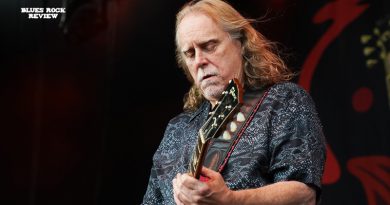
For more than five decades, Frank Beard provided the rhythmic foundation behind one of the most distinctive bands in American rock history. Following the ZZ Top drummer’s death on August 17, Warren Haynes reflected on Beard’s influence, explaining why his playing was far more unique than it sometimes received credit for.
Appearing on the Blues Rock Show, Haynes recalled discovering ZZ Top as a kid and becoming an early admirer of the Texas trio.
“I was a huge ZZ Top fan from when I was probably 12 or something was when I first discovered their music,” Haynes said.
While Billy Gibbons’ guitar playing and Dusty Hill’s bass and vocals were essential ingredients in ZZ Top’s sound, Haynes believes Beard’s approach behind the kit was equally important. It wasn’t simply Beard’s ability to hold down a groove that impressed him. It was the unusual choices he made within those grooves.
“I always maintained that Frank was the perfect drummer for that band,” Haynes said. “He was such a unique drummer in the way that he would come up with these drum patterns that nine out of 10 drummers would have played differently. But what he played made the songs even more special.”
That individuality helped define the early ZZ Top records that made such a significant impression on Haynes.
Before the synthesizers, sequencers and massive MTV success of the 1980s, ZZ Top had already established itself as one of America’s great blues rock bands. Records such as Tres Hombres and Fandango! were built around the chemistry between Gibbons, Hill and Beard, combining Texas blues, boogie and hard rock with an unmistakable rhythmic swagger.
Haynes would eventually get the opportunity to know the musicians whose records had influenced him years earlier.
“Getting to know them through the years and, and playing a lot of shows together and stuff was a, a real honor for me,” he said.
ZZ Top’s influence would also find its way directly into Gov’t Mule.
When Haynes, Allen Woody and Matt Abts formed Gov’t Mule in 1994, the trio openly embraced the tradition of the great rock power trios that came before them. Haynes viewed the format as something that had largely disappeared by the mid-1990s, particularly the kind of improvisational trio that allowed musicians to stretch songs beyond their conventional structures.
“When Gov’t Mule started in 1994, we kind of wore on our sleeves who our influences were,” Haynes said. “We took all the great trios and paid tribute to them in our own way because the whole concept of Government Mule was to bring back the rock trio, which at that time was, was kind of gone, especially the improvisational rock trio.”
Haynes pointed to the Jimi Hendrix Experience, Band of Gypsys and Cream among the groups that helped inspire the concept. He also cited Mountain, Led Zeppelin and The Who as part of the musical lineage Gov’t Mule drew from.
ZZ Top belonged firmly in that conversation.
The connection was made particularly clear when Gov’t Mule tackled “Just Got Paid,” a Billy Gibbons and Bill Ham composition originally released on ZZ Top’s 1972 album Rio Grande Mud. Gov’t Mule recorded its own version early in the band’s career and continued performing the song live.
“I think our first recording sessions, we did a version of ‘Just Got Paid,’ and we used to play it in a lot of the live shows, Haynes said. “So it was never any secret that we were fans of and influenced by, by those guys.”
For Haynes, that admiration only grew after getting to know ZZ Top personally.
“And after we became friends through the years even more,” he said.
Haynes also offered a recommendation for listeners whose knowledge of ZZ Top begins primarily with the band’s enormous 1980s commercial breakthrough.
The 1983 album Eliminator transformed ZZ Top into global superstars through hits including “Gimme All Your Lovin’,” “Sharp Dressed Man,” but Haynes stressed that anyone who associates the group primarily with that era is missing a crucial part of its story.
“I encourage anybody that only knows the post-Eliminator ZZ Top to go back and hear the first six or seven records because they’re so powerful,” Haynes said. “And anybody that hasn’t discovered that music needs to check it out.”
For Haynes, Beard wasn’t simply the drummer who happened to sit behind Gibbons and Hill. He was exactly the drummer ZZ Top needed.
“The perfect drummer for that band,” as Haynes put it.