
The Devil’s Music: Why the Blues is the Perfect Soundtrack This Halloween
When we consider the history of blues, horror is as elemental to the music and its evolution as the guitar, the devil’s note, the Antebellum/Civil War/Jim Crow South, and heartbreak. Fear and storytelling are core components of the music we love, and play a critical part in making the music as endearing and enduring as it remains.
My first introduction to blues music was the character Tommy in the 2000 Coen Brothers Southern Gothic comedy film O Brother, Where Art Thou? Tommy is among the most prominent instances of the Robert Johnson deal with the Devil myth being replicated in film. The story of Johnson selling his soul to the Devil at a crossroads at midnight in exchange for skill at playing the blues, encouraged by Johnson himself in stories and tunes like “Crossroad Blues” and “Me and the Devil,” solidified the blues’ place in the darker side of American culture, inexorably linking the music with the macabre and horror. On a personal note, it’s among the primary facets of blues that drew me to the genre as a lifelong horror nerd.
Horror as Theme in Blues
Plenty of foundational blues musicians embraced the creepy connections of the music, playing up Hoodoo influences in southern Black culture, telling ghost stories, and leaning into the sin and debauchery reputations of juke joints. Blues, after all, was proclaimed by religious communities in the US from the first half of the 20th century to today, The Devil’s Music.
A selection of eerie/scary/darker classic blues tunes, beyond Johnson’s:
- “Devil Got My Woman,” Skip James
- “Cemetery Blues,” Bessie Smith
- “Evil is Goin’ On,” Willie Dixon
- “I Put a Spell on You,” Screamin’ Jay Hawkins
- “Lonesome Ghost Blues,” Lonnie Johnson
The Devil’s Interval and Non-Western Influences
A major, elemental component of blues structure is the incorporation of tritones into pentatonic scales. A tritone is a dissonant interval made up of three whole steps within a scale. In what is popularly called the blues scale, this tritone appears in the standard pentatonic scale as an extra chromatic note. This extra note is often referred to as the “blue note” or “Devil’s note” because it changes the overall atmosphere of the scale to feel more sinister as a result of the dissonance of adding an extra tritone where a listener would normally expect a more consonant jump in notes. In essence, one of the keystone building blocks of the blues is this Devil’s note. This, coupled with the reputation of blues as music to drink and party to, went a long way towards the demonization of blues music by many churches, especially in the American South.
Another key aspect of the perception of blues music as incompatible with traditional Christian values in the US was the inextricable fusion of non-Western musical foundations of blues. Blues is a rich stew made up of multiple African, Caribbean, and Arab musical traditions, blended with multiple European traditions. The guitar is a European, specifically Spanish, instrument in its origin, and blues music is a major reason why the guitar more than the banjo emerged as the most popular instrument found in American homes in the second half of the 20th century. The banjo, for what it’s worth, is an African instrument, while the piano is also a European instrument. This blending and repurposing of classical Western staples with non-Western influences made the blues feel alien and threatening to many white Christians in the South who were used to firmly Western-originating or inspired sounds in both their church music and popular music.
Sinners and Cinema
The reason the character Tommy in O Brother, Where Art Thou? is no longer the most well-known instance of the Robert Johnson myth on the big screen is Ryan Coogler’s 2025 horror-musical masterpiece Sinners, which blew up this year at the box office and with critics. One of the film’s heroes is Preacherboy Sammie Moore, played by Miles Caton (no slouch as a bluesman himself), inspired directly by the Robert Johnson legend, with the Devil being replaced by a master vampire that wants Sammie’s blues talent for himself.
At its heart, Sinners is a movie about the resilience and sacred power of music, especially the blues, to build and strengthen identity in community, and why external opponents of communities might want to destroy or steal the music. Without spoiling the film, Sinners revolves around two twin brothers opening a blues joint in Jim Crow Mississippi, and the power of the blues attracts the attention of a group of evil vampires who want not just the blood, but the culture of the film’s heroes. This theme is best hammered home about halfway through the movie in a transcendent scene where the film’s blues musician protagonists summon the past and future of blues influences to rock the joint. As the character Delta Slim, a veteran blues man played to perfection by Delroy Lindo, says in the film,
- “See, white folks, they like the blues just fine. They just don’t like the people who make it.”
- “Blues wasn’t forced on us like that religion. Nah, son, we brought that with us from home. It’s magic what we do. It’s sacred… and big.”
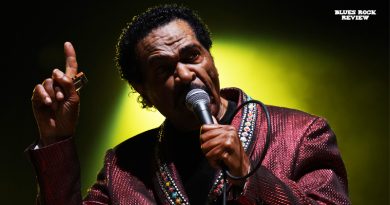
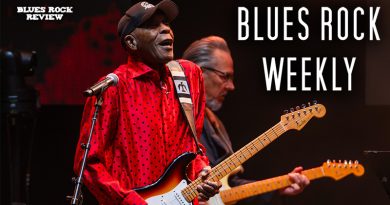
Beyond the thematic honor paid to the blues by the film’s story, Ryan Coogler included legendary and emerging blues musicians in the production. Buddy Guy, Bobby Rush, and Kingfish all appear in the film and contribute to the soundtrack, which includes a couple of originals that would be at home in any blues rock fan’s collection. Buddy Guy, one of the greatest living legends in blues at 88 years old, said in a Variety interview that he took the role because he once promised BB King and Muddy Waters before they died that he would keep the blues alive, and he felt that participating in Sinners would spread appreciation for the music.
Before Sinners and before and after O Brother, Where Art Thou?, the Robert Johnson myth appeared as either named or indirect inspiration in multiple popular film and television shows, perhaps most notably in Crossroads (1986), where a young blues guitarist goes on a road trip across the South in search of lost Robert Johnson records, and in “Crossroad Blues,” episode eight, season two of the popular action-horror television series Supernatural, where the heroes of the show investigate the deaths of two musicians by hell hounds sent to collect their souls after their contract with the Devil ran out. Supernatural also features the trope of meeting a demon or the Devil at a crossroads at midnight to strike a deal repeatedly throughout its long run.
Blues in Horror Literature and Video Games
For the past few years, I’ve been slowly making my way through a long reading list of horror fiction books featuring rock music as a major theme and/or rock musicians as main characters. It’s a surprisingly robust subgenre, with contributions from such esteemed authors as Stephen King, Anne Rice, George RR Martin, Grady Hendrix, and Elizabeth Hand. Several entries in the subgenre heavily involve blues musicians and blues rock concerts. Two notable works emerge from the list: Southern Gods by John Hornor Jacobs and The Blues Ain’t Nothin’: Tales of the Lonesome Blues Pub by Tina L. Jens. Southern Gods follows a WW2 veteran searching for a mysterious blues musician who broadcasts his music on a pirate radio station that drives listeners mad. The Blues Ain’t Nothin’ is an episodic examination of a haunted blues bar on the North Side of Chicago, and essentially functions as a scary short story anthology. Both works are well worth checking out this Halloween season.
Also released in 2025 is South of Midnight from Compulsion Games. South of Midnight is a dark fantasy action game on multiple plat forms that follows Hazel Flood as she makes her way through a scary and magical version of the deep South, encountering “haints,” monsters, and the occasional talking giant catfish god after her hometown is ravaged by a hurricane. Hazel is guided on her quest by Shakin’ Bones, an undead bluesman who plucks out delta scales on his guitar with skeletal fingers as he delivers advice and songs. The original songs and soundtrack for South of Midnight are unparalleled, and both the sounds and spirit of blues flow throughout the game’s story and gameplay.
The Blues as Horror
In popular culture and the public mind, blues is inseparably intertwined with horror. This is a result of specific historic developments in the American South, religious trends and expectations, cultural blending in a closed geography, and some encouragement from blues musicians themselves. Authors, filmmakers, and artists of multiple mediums from both within and outside of Southern Black culture took this perception and ran with it to create works that heavily inform the perception, sometimes with grace and respect, and other times with exploitation and stereotypes.
Even when blues musicians aren’t purposefully writing about ghosts or Devils, they often write about horrific things: violence, racism, and emotional pain. If the blues is in part about expressing heartache, sadness, joy, and love, it is also in no small part about expressing fear, either of society or of one’s own overwhelming emotions and faults.
Happy Halloween.