

Bluesbreakers to Blues Legends: How John Mayall Built Generations of Stars
Few figures in modern music have had an impact as far-reaching as John Mayall. Known as the “Godfather of British Blues,” Mayall didn’t just play the blues; he became a mentor and launching pad for a generation of artists who would go on to define blues rock. Eric Clapton, Peter Green, Mick Taylor, and Walter Trout all passed through his ranks, each taking the lessons learned under Mayall’s direction and using them to shape their own careers. Through his vision and leadership, Mayall transformed his Bluesbreakers into a proving ground that produced some of the greatest musicians in the genre’s history.
The Rise of the British Blues Scene
In the early 1960s, the British blues scene was beginning to catch fire. Young musicians were discovering records by Muddy Waters, Howlin’ Wolf, and B.B. King, and they were determined to recreate that sound. John Mayall, originally from Manchester, was among the first to take the blues seriously in Britain. After moving to London in 1963, he formed John Mayall & The Bluesbreakers. The lineup would change constantly, but the purpose stayed the same: to honor traditional blues while giving talented musicians room to grow. That approach would influence the entire British blues boom and create a direct line to modern blues rock.
Eric Clapton and The Beano Revolution
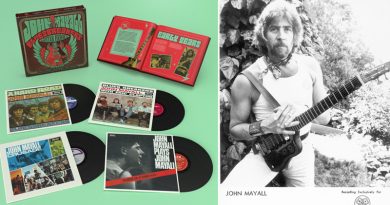
Eric Clapton joined The Bluesbreakers in 1965 after leaving The Yardbirds. The partnership produced one of the most important albums in blues rock history, Blues Breakers with Eric Clapton, released in 1966. Often called “The Beano Album,” it redefined electric blues guitar and introduced the Gibson Les Paul through a cranked Marshall amp, a combination that became the sound of the era. Clapton’s performances on songs like “Hideaway” and “All Your Love” set a new benchmark for tone and technique, inspiring countless guitarists to follow his lead. The album’s success also proved that blues could be commercially viable in the rock market, opening the door for a new generation of players.
Peter Green and a New Chapter
When Clapton left to form Cream, Mayall quickly found a replacement who would take the band in another direction. Peter Green joined in 1966 and immediately made his presence known. His playing was expressive and melodic, built around tone and emotion rather than flash. His work on A Hard Road and tracks like “The Super-Natural” showed a depth of feeling that set him apart from other guitarists of the time. After his time with Mayall, Green went on to form Fleetwood Mac with fellow Bluesbreakers alumni Mick Fleetwood and John McVie. The early Fleetwood Mac years were steeped in the blues foundation Green developed under Mayall’s leadership, and the connection between the two bands remains one of the most important in British rock history.
Mick Taylor Joins the Line of Greats
Mick Taylor was the next young guitarist to join The Bluesbreakers, and his arrival kept the band’s creative momentum going. Taylor’s lyrical phrasing and clean tone added a new dimension to Mayall’s evolving sound. He appeared on several key albums, including Crusade (1967), Bare Wires (1968), and Blues from Laurel Canyon (1968). Taylor’s playing on songs like “Oh, Pretty Woman” and “Snowy Wood” revealed a sophistication and fluidity beyond his years. When he left in 1969 to join The Rolling Stones, it continued the now-familiar pattern: musicians refining their craft with Mayall before stepping onto the world stage.
Expanding the Sound in the 1970s
By the early 1970s, Mayall’s influence was clear. Clapton, Green, and Taylor had all achieved major success, yet Mayall remained focused on his own evolution. He began experimenting with jazz and funk elements, expanding his sound on live albums like Jazz Blues Fusion and Moving On. Relocating to California, he immersed himself in the local scene while maintaining his deep respect for the blues tradition. His open-minded approach led to collaborations with musicians from across genres, further demonstrating that the blues could adapt and remain relevant in changing musical landscapes.
Walter Trout and the 1980s Revival
In the 1980s, Mayall once again introduced a guitarist who would become one of the modern era’s greats: Walter Trout.
Prior to joining the Bluesbreakers, Trout and Canned Heat were on the road with the Bluesbreakers, which led to a friendship with Mayall.
Trout joined The Bluesbreakers in the mids ’80s, bringing a fiery, emotional style that reenergized the group. He appeared on albums such as Behind the Iron Curtain and Chicago Line, helping bridge traditional blues with contemporary energy. His time with Mayall sharpened his skills and set the stage for his successful solo career, where he became known for his passionate live performances and unfiltered intensity. Trout’s years with Mayall reinforced the bandleader’s ongoing role as a mentor and his ability to recognize exceptional talent.
Coco Montoya and the 1990s Lineup
After Trout left to pursue a solo path, Mayall continued mentoring emerging players. Coco Montoya, another standout guitarist, joined the band in the mid-1980s. Montoya, a former drummer for Albert Collins, switched to guitar under Collins’ mentorship and refined his sound with Mayall. His smooth phrasing and soulful tone added a new layer to the group’s dynamic, and his time in The Bluesbreakers helped establish him as one of the leading modern voices in blues rock. The continued success of musicians coming out of Mayall’s band showed that his musical pipeline remained as vital as ever.
Buddy Whittington later joined the band as lead guitarist in 1993 and had a long run until 2008.
A Band That Became a Family Tree
What made John Mayall unique as a bandleader was his ability to recognize potential and give it space to flourish. His leadership style balanced structure with freedom, allowing musicians to explore their ideas while maintaining the authenticity of the blues. He emphasized learning from the genre’s pioneers, often performing songs by artists such as Freddie King, Otis Rush, and T-Bone Walker. This connection to the roots ensured that every generation of Bluesbreakers understood the foundation they were building upon.
The roster of artists who passed through The Bluesbreakers is staggering. Beyond Clapton, Green, Taylor, Trout, and Montoya, the lineup over the years included Jack Bruce, Mick Fleetwood, John McVie, Andy Fraser, Harvey Mandel, Larry Taylor, Aynsley Dunbar, Rocky Athas, and Carolyn Wonderland. Each musician carried forward the lessons learned under Mayall’s guidance, spreading his influence through nearly every corner of rock and blues.
Mayall’s Enduring Work and Recognition
Even into his later years, Mayall remained active and committed to the music. He continued touring into his eighties and released albums like Talk About That (2017) and Nobody Told Me (2019), which featured collaborations with Joe Bonamassa, Alex Lifeson, and Todd Rundgren. These projects showed that Mayall’s passion for collaboration never waned and that he was still connecting generations of musicians through the blues.
Following his death in 2024, Mayall was inducted into the Rock and Roll Hall of Fame.
A Legacy That Still Shapes the Blues
Mayall’s influence extends far beyond his own recordings. Modern artists consistently cite him as one of the key architects of the British blues explosion and a mentor figure for generations of guitarists. In an interview with Blues Rock Review shortly after Mayall’s death, Joe Bonamassa said, “Every suburban white kid who was remotely interested in blues guitar had to go through The Beano Album. That was just standard issue. It was Stevie Ray Vaughan, The Beano Album (…) and Hendrix.” Joe said, “The impact of his music and the impact of the blues, you could never imagine what the music would sound like if it wasn’t for John Mayall and Alexis Korner and Big Bill Broonzy. And those guys were the founding fathers of this movement that turned into the Led Zeppelin’s, the Rory Gallagher’s, and the Gary Moore’s.”
Bonamassa’s reflection captures what many in the blues community already know: John Mayall wasn’t just a performer; he was a catalyst. His dedication to the music and his ability to bring together exceptional players built a foundation that still supports the genre today. Without his leadership, the sound of modern blues and blues rock might have been entirely different.
When tracing the lineage of blues rock, the path inevitably leads back to Mayall’s Bluesbreakers. His bands served as classrooms for some of the most influential musicians in rock history. He created a space where the blues could evolve, yet never lose its soul. More than six decades after forming The Bluesbreakers, John Mayall’s legacy remains one of mentorship, creativity, and unwavering devotion to the music that started it all.


At least you give credit to John Mayall. Eric Clapton may have been good but he’s nothing when put up against Jeff Beck or Jimmy Page.
Nonsense, John!
All were very great in different ways.
Like Bach & Beethoven, for example!
Or The Beatles vs. the Rolling Stones
The Blues has got me and I soak up any Blues sounds by any artist….that’s the beauty of the Blues, so many great artists have performed it so well and so differently
Long live the Blues!!
I don’t believe there was a greater mentor of accomplished artists than John Mayall. He was selfless in the manner helped them in their development.
Yes, the music. Yes, the mentoring. But also, the respect for making quality music. I can still see Mr.Mayall coming out onto the little stage in some dinky Luxembourg club, carrying his amp out and setting it up himself. That impressed the hell outta us.
Two years after the death of John Mayall, the greatest white blues musician, his fans are still waiting for some tribute or event in recognition and gratitude for his great work in popularizing, evolving, and revolutionizing the blues during six decades dedicated body and soul to this style of music. Without John Mayall, there probably wouldn’t have been fundamental bands like CREAM, FLEETWOOD MAC, COLOSSEUM, etc.
Long live the blues!
Dionís Marmaneu
Director and presenter of the program “El So de la Música” on UJI Radio, the radio station of the Jaume I University of Castellón, Spain