

Why Albert Collins Deserves More Credit in Blues History
When the conversation turns to blues guitar legends, names like B.B. King, Albert King, Freddie King, and Stevie Ray Vaughan dominate the discussion. These giants unquestionably left their mark, shaping the sound of the electric blues and carrying it to new audiences. Yet one man, though often celebrated by guitarists and hardcore blues fans, remains underappreciated in the broader story of blues history: Albert Collins. Known as the “Master of the Telecaster” and nicknamed the “Iceman,” Collins brought a sound so unique that it could be recognized within seconds. His influence on generations of guitar players is undeniable, and his stage presence made him one of the most unforgettable performers in blues history.
Still, Collins has never received the widespread credit he deserves. He won a Grammy, inspired future icons, and toured relentlessly, but his name is too often overlooked when people discuss the greats. To understand why Albert Collins deserves more recognition, it is necessary to look at his life, his sound, his impact, and his legacy in shaping the blues landscape.
Early Life and Musical Beginnings
Albert Collins was born in Leona, Texas, in 1932, but his family soon moved to Houston. Like many bluesmen, he was immersed in music from an early age, exposed to gospel and blues through family and community gatherings. Collins initially started on piano, but by his teenage years, the guitar became his calling. His cousin, blues guitarist Lightnin’ Hopkins, was an important influence. Collins was captivated by Hopkins’ playing and decided to carve his own path in the blues.
In the early 1950s, Collins formed his first bands and began playing the Texas club circuit. Houston in those days was a fertile ground for blues talent, and Collins found himself surrounded by musicians pushing boundaries. Even then, he stood out for his unusual guitar techniques and his preference for the Fender Telecaster, a guitar that would become synonymous with his name.
Developing the Ice Pick Sound
What separated Albert Collins from virtually every other guitarist was his tone. He developed his signature “Ice Pick” sound. It was sharp, piercing, and unlike anything else on the scene. Collins achieved this in several ways.
First, he used an unusual open F minor tuning, which gave his guitar voicings a distinctive edge. Second, he used a capo, often placing it high up the neck to change the timbre of his playing. Third, he played with his fingers instead of a pick, which gave his attack more snap and bite. Combined with the naturally bright tone of the Telecaster, these choices produced a sound that was instantly recognizable.
Collins was also a master of phrasing. Where some guitarists filled space with flurries of notes, Collins often held back, letting a single sustained bend hang in the air before stabbing again with a sudden flurry. This dynamic use of space created tension and release, a hallmark of great blues playing. His solos felt conversational, like he was speaking through his guitar.
The Early Singles and “Frosty”
Collins recorded his first singles in the late 1950s and early 1960s, but his breakthrough came with the instrumental “Frosty.” The track was built around a funky groove and Collins’ signature stinging lead guitar. It became a regional hit and cemented his reputation in Texas as a rising star. “Frosty” also set the tone for Collins’ career, where instrumentals often played as big a role as vocal tracks.
Other early cuts like “Thaw Out,” “Sno-Cone,” and “Icy Blue” revealed not only his love for icy metaphors (which earned him the nickname “The Iceman”) but also his willingness to experiment with funk, soul, and R&B influences. Collins was never content to play straight 12-bar blues; he wanted grooves, rhythms, and textures that made people move.
A Stage Show Like No Other
If Collins had only been a great guitarist, he would still be remembered. But what truly set him apart was his showmanship. His live performances were legendary, and stories of them still circulate among fans and fellow musicians.
Collins was famous for his long guitar cord, sometimes stretching 100 feet or more, which allowed him to leave the stage mid-solo and wander through the crowd. He would climb on tables, walk outside the venue, or even play from the street while still connected to his amp. Audiences never forgot it. His energy, charisma, and willingness to break the barrier between performer and audience made every show an event.
He also infused humor into his sets. Collins had a wry sense of timing, often playing riffs that seemed to comment on his lyrics or the atmosphere in the room. His banter with the crowd was just as sharp as his guitar licks. Musicians who played with him often remarked that Collins could electrify a room like no one else.
The 1970s Struggles and Resurgence
Like many blues artists, Collins faced challenges in the late 1960s and 1970s. Rock was dominating the charts, and blues artists often found themselves struggling to get airplay. While legends like B.B. King managed to crossover with hits like “The Thrill Is Gone,” Collins never had that kind of breakthrough.
However, Collins refused to fade away. He kept touring relentlessly, building a dedicated following city by city. His perseverance paid off when he was signed to Alligator Records in the late 1970s, a label dedicated to blues artists. Albums like Ice Pickin’ (1978), Frostbite (1980), and Don’t Lose Your Cool (1983) brought him back into the spotlight and introduced his music to younger audiences.
These records showed that Collins had lost none of his fire. Tracks like “Honey Hush” and “Master Charge” blended humor, funk, and blues with his trademark sting.
The Grammy Win: Showdown!
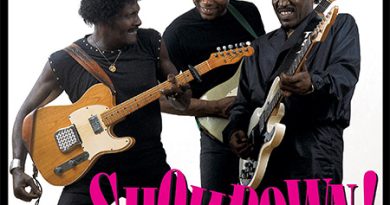
One of the crowning achievements of Collins’ career came in 1985 with the album Showdown!, a collaboration with Robert Cray and Johnny Copeland. The album was a tour de force of modern electric blues, showcasing three distinct guitarists with complementary styles. Collins’ biting leads contrasted beautifully with Cray’s smooth phrasing and Copeland’s Texas grit.
Showdown! won the Grammy Award for Best Traditional Blues Recording and became a landmark album of the 1980s blues revival. It also exposed Collins to a wider audience, as Cray was breaking through to mainstream recognition at the time. The Grammy was a validation of Collins’ decades of hard work and artistry.
Albert Collins’ Influence on a New Generation
Perhaps Albert Collins’ greatest legacy is the influence he had on other musicians. His impact on the Texas blues scene was immense, paving the way for artists like Stevie Ray Vaughan, Jimmie Vaughan, and the Fabulous Thunderbirds. Stevie Ray often cited Collins as one of his heroes, and elements of Collins’ phrasing and tone can be heard in his playing.
Robert Cray also acknowledged Collins as a mentor and influence, describing how Collins’ originality inspired him to carve out his own distinct voice. Guitarists as diverse as Gary Moore, Coco Montoya, and Jonny Lang have drawn from Collins’ style. Even rock players admired him. His ability to combine raw power with groove made him a favorite among guitarists who valued both technical skill and emotional expression.
The Funk Factor
One area where Collins deserves more credit is his ability to infuse funk into the blues. While most Texas blues players leaned on shuffles and slow burners, Collins introduced syncopated rhythms and danceable grooves. Songs like “I Ain’t Drunk” or “Put the Shoe on the Other Foot” have as much funk as they do blues. This made his music accessible to wider audiences and helped keep the blues fresh.
In this sense, Collins was ahead of his time. Decades later, artists like Gary Clark Jr. would mix blues with funk and soul in similar ways. Collins showed it could be done without diluting the blues’ essence.
A Relentless Road Warrior
Collins was known as one of the hardest working men in blues. He toured tirelessly, often playing over 200 shows a year. He never took his fans for granted, pouring himself into every performance, no matter the size of the venue.
This work ethic endeared him to audiences and earned him respect among fellow musicians. Collins did not chase trends or soften his sound for commercial appeal. He trusted that authenticity and energy would keep people coming back, and he was right.
Recognition in His Lifetime and After
Albert Collins passed away from lung cancer in 1993 at the age of 61. His death was a blow to the blues community, as he was still performing at a high level and influencing younger players. During his lifetime, he won a Grammy, multiple W.C. Handy Awards, and was inducted into the Blues Hall of Fame. However, an induction into the Rock and Roll Hall of Fame is still missing.
Yet his name is too often absent from broader discussions of blues history. Casual fans may know B.B. King or Stevie Ray Vaughan, but many have never heard of Albert Collins. This lack of mainstream recognition belies his importance. His guitar innovations, his unforgettable stage presence, and his influence on future generations make him one of the essential figures in the story of blues.
Why Albert Collins Deserves More Credit
So why does Albert Collins deserve more credit? Because he was a trailblazer. He created a sound that was entirely his own, inspiring countless guitarists to seek individuality in their playing. He kept the blues alive during times when the genre was overshadowed by rock, disco, and pop. He connected with audiences in ways that few performers ever could, turning every show into an experience.
Collins also expanded what blues could be. By blending funk, humor, and soul into his music, he proved that the blues was not confined to tradition. He pushed the genre forward without losing its roots.
Most importantly, Collins exemplified the spirit of the blues. He worked hard, stayed true to himself, and never gave less than everything on stage. That authenticity is why those who saw him never forgot him, and why musicians continue to cite him as an influence.
Albert Collins may not have sold out stadiums like Led Zeppelin or topped charts like Clapton, but he left behind a legacy that is every bit as vital. His piercing guitar tone, his fearless originality, and his larger-than-life stage presence made him one of the most unforgettable figures in blues history.
If the measure of greatness is not just fame but influence, authenticity, and the ability to touch people with music, then Albert Collins belongs at the very top of the list. It is time for blues history to give the Iceman his due.
I saw Albert and the ice breakers in a club in Tucson Arizona three or four times.. small venue cool college crowd.. he’d played for hours and I loved when he would come out into the audience with that long cord he’d sit down right next to you and be jamming on the guitar while the band played on stage he was excellent totally underrated and I’m glad I got to see him live… Blues legend
Excellent and extremely informative article Jon. 👍
Well deserved, and overdue in general, media recognition for a true Blues-Rock pioneer, as well as road warrior.
My personal favorite:
Brick baby
That’s what I’m gonna throw up side your head!
A love song…
His band produced solo artists Debbie Davies and Coco Montoya (he was a drummer too. I saw and talked to Albert a few months before he passed, a true gentleman and crowd pleaser