
100 Years of B.B. King: How the King of the Blues Changed Music Forever
On September 16, 2025, the world celebrates what would have been the 100th birthday of B.B. King. Few artists have left as deep and lasting an imprint on music as King, a man whose name became synonymous with the blues itself. For nearly seven decades, he toured relentlessly, recorded classics that shaped generations, and carried the blues from rural Mississippi to the grandest stages in the world. His centennial offers a moment not only to honor his music but also to reflect on the cultural legacy he left behind.
From Mississippi Cotton Fields to the World
B.B. King’s journey began in Itta Bena, Mississippi, in 1925, a time and place where poverty and segregation weighed heavily on Black life. He grew up working the cotton fields and singing gospel in church, surrounded by the music of the Delta. The blues was more than just entertainment; it was survival, a way to articulate pain and resilience. King’s early exposure to artists like Lonnie Johnson and T-Bone Walker showed him that the guitar could be an instrument of personal expression as powerful as the human voice.
When King first picked up a guitar, it was not just an instrument but a lifeline. His ability to transform hardship into song became his signature. After moving to Memphis in the late 1940s, King began working at radio station WDIA, the first station in the United States to feature an all-Black staff. His role as a DJ gave him exposure and helped him establish himself as “Beale Street Blues Boy,” a name soon shortened to B.B. King.
Lucille and the Language of the Guitar
One of the enduring parts of King’s legend is his guitar, affectionately named Lucille. The story goes that after a fight broke out at a dance hall in Arkansas, the building caught fire. King rushed back inside to retrieve his guitar, nearly losing his life in the process. He later learned the fight was over a woman named Lucille, and he gave the name to his guitar as a reminder never to risk his life over such foolishness again.
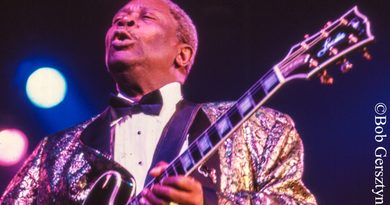
Lucille was more than just a guitar; she became a voice. King’s style, characterized by his fluid vibrato and soaring bends, was instantly recognizable. Unlike many guitarists, he rarely played chords, preferring to let single notes sing like a voice carrying emotion. His phrasing was conversational, almost as if he were speaking directly through the guitar. This distinct style influenced generations of guitarists, from Eric Clapton to Carlos Santana, Gary Moore, and John Mayer. To this day, a guitarist who bends a note with precision and feeling is often said to be “playing like B.B.”
King of the Road
What set B.B. King apart was his dedication to bringing the blues to the people. In his prime, he performed more than 300 shows a year. He once joked that he lived on the bus, with the stage as his living room. This relentless schedule made him one of the most traveled musicians of the 20th century. His tireless touring built a bond with fans around the world and gave him a reputation as one of the hardest working artists in music.
King was not content with staying in one place or one audience. He took the blues to Carnegie Hall, the Apollo Theater, and later to the Montreux Jazz Festival in Switzerland. He played for presidents, while also continuing to perform in small clubs where he had begun. His accessibility made him beloved not only as a musician but also as a symbol of perseverance and humility.
Crossing Over Without Compromise
In 1969, B.B. King’s career reached new heights when his single “The Thrill Is Gone” became a crossover hit. The song earned him a Grammy Award and introduced his music to rock audiences who were just discovering the blues. At a time when many blues artists struggled to find mainstream success, King managed to cross over without diluting his sound. He stayed true to the essence of the blues while opening the door for it to be embraced by a wider audience.
His collaborations further expanded his reach. King played with Eric Clapton, U2, and countless others, bridging generations and genres. The 1989 hit “When Love Comes to Town” with U2 brought him to the attention of a new generation. Albums like Riding with the King, recorded with Clapton in 2000, reinforced his role as a unifying figure in the blues and beyond.
A Global Ambassador for the Blues
Throughout his life, B.B. King saw himself not just as a performer but as a cultural ambassador. He believed the blues was a universal language that could connect people regardless of background. He performed in Africa, and brought the blues to places that had never experienced it before. His shows often included storytelling, where he explained the history and meaning of the blues to audiences unfamiliar with the genre.
King’s efforts helped secure the blues as a vital part of the world’s musical heritage. In 1987, he was inducted into the Rock and Roll Hall of Fame, a recognition of the central role he played in shaping modern music. He earned 15 Grammy Awards and a Presidential Medal of Freedom, among countless other honors. Yet for all the accolades, he remained humble, often expressing surprise that audiences wanted to hear him play at all.
Mentor and Influence
The reach of B.B. King’s influence cannot be overstated. Nearly every blues or rock guitarist of the past half-century owes something to his style. But beyond his playing, King also took the role of mentor seriously. Younger artists frequently spoke of his generosity both on and off stage. He would invite musicians to play with him, giving them exposure and encouragement. His warmth made him not only respected but beloved in the industry.
Artists like Buddy Guy, Robert Cray, Joe Bonamassa, and Anthony Gomes have all cited B.B. King as a guiding light. His ability to pass on the torch ensured that the blues remained a living tradition rather than a relic of the past.
The Human Connection
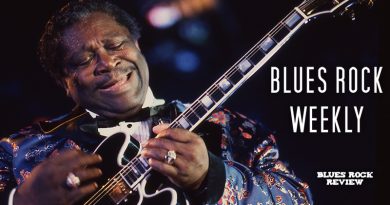
Part of B.B. King’s magic was his ability to connect with audiences. He sang with sincerity, laughed with ease, and spoke directly to people’s hearts. Whether performing for a small club or a packed arena, he created intimacy. Fans often recall the way he would close his eyes, bend a note, and let the emotion flow as though he were confiding a secret. That authenticity made his concerts unforgettable experiences.
King also understood the power of gratitude. He often ended his shows by thanking the audience repeatedly, as if he could not believe his luck at being on stage. This humility only deepened his bond with fans and reinforced his image as a man of the people.
A Legacy Beyond Music
B.B. King’s centennial is not just a celebration of music but of a life that transcended it. His story is one of resilience, determination, and grace. He rose from the fields of Mississippi to the world stage without losing his sense of self. His music provided a soundtrack for countless lives, offering comfort, joy, and catharsis.
King’s impact extends into culture and education as well. The B.B. King Museum and Delta Interpretive Center in Indianola, Mississippi, preserves his legacy while teaching visitors about the history of the Delta and the blues. His story continues to inspire discussions about race, resilience, and the transformative power of art.
One Hundred Years of B.B. King
Marking what would have been his 100th birthday, it is clear that B.B. King’s presence still resonates. His recordings remain essential listening, his guitar style remains a benchmark, and his name remains synonymous with the blues. More importantly, his humanity continues to shine through. In a century that witnessed immense change, King’s music served as both a reflection and a refuge, reminding people of the enduring strength of the human spirit.
The centennial is not only about looking back but also about ensuring the future of the blues. Festivals, tributes, and concerts around the world this year honor his memory while showcasing new generations of artists he inspired. Each bend of a guitar string, each heartfelt lyric sung, carries a piece of King’s influence.
B.B. King once said, “The beautiful thing about learning is that no one can take it away from you.” The same can be said of his legacy. One hundred years after his birth, B.B. King remains an eternal teacher, reminding the world that the blues is not about despair but about survival, connection, and the unbreakable human spirit.