Inside a B.B. King Concert From 1997: Here’s What Happened
B.B. King was born on September 16, 1925, and died at the age of 89 in 2015. This would be his 101st birthday, and his legend has only grown since his passing. In 2025, his 100th birthday triggered events in Memphis, Tennessee, and Indianola, Mississippi, Joe Bonamassa’s Blues Summit, along with tributes, museum events and memorials. In 1997, I attended and reviewed a B.B. King concert in Portland, Oregon, but it didn’t get published until now, 29 years later.
On Monday night, February 3, 1997, B.B. King played at the Roseland Theater in Portland, Oregon, to a sold-out, standing-room-only crowd that nearly lapped itself as it wound around the block waiting to enter for the second show of the evening. The earlier 7:00 PM show had just let out, and the theater was being cleaned and prepared for the next show. Upon entering the venue, the first thing that caught my attention was the attire of the security personnel at their various stations. The same people who were wearing T-shirts and blue jeans at the Hot Tuna and BoDeans shows a few months earlier were now all wearing suit coats, ties and dress slacks.
The show began at about 10:10 PM with Corey Harris opening. Harris, a Louisiana native, played solo. He sang a variety of traditional blues, gospel and original blues compositions while accompanying himself on dobro and acoustic guitar. One of the most notable things about his set was the intensity of his songs. I could see tears running down his cheeks during most of his numbers. His set ran 30 minutes.
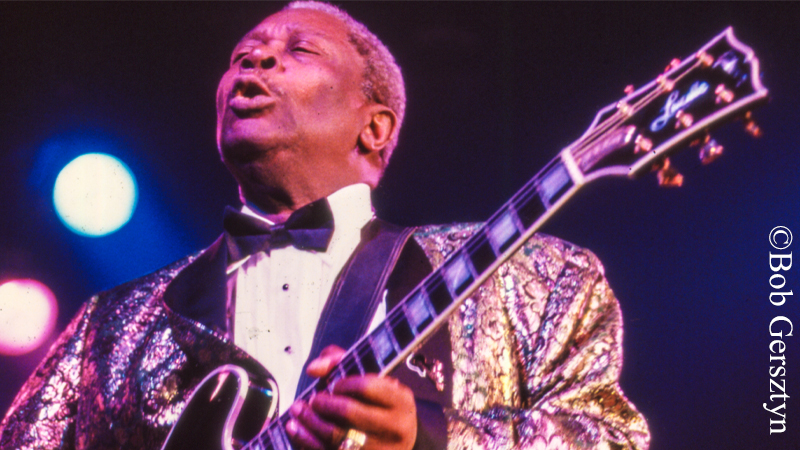
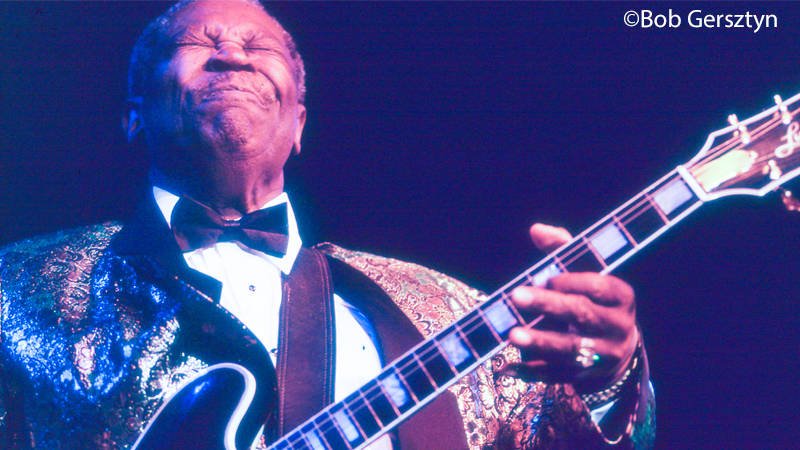
The crew took the next half hour to set the stage for the main act. At 11:10 PM, B.B. King’s nine-piece orchestra, decked out in tuxedos, made its entrance. They played two instrumental numbers before “The King of the Blues” appeared with Lucille in hand. The 71-year-old, multi-award-winning blues legend then proceeded to demonstrate the reason for his title during the next 1½ hours.
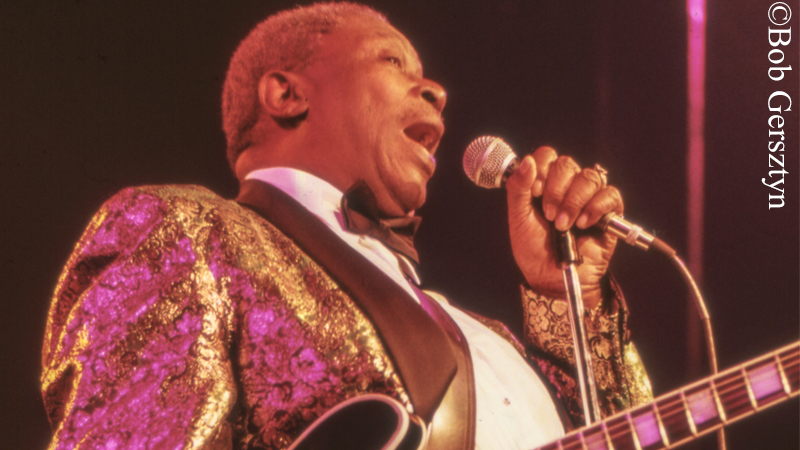
Throughout his set, he repeatedly told the crowd, “Thank you so much!” for their applause and adulation. At one point during the set, a woman in the crowd tried to give B.B. a rose. When security tried to restrain her, King beckoned for them to allow her to pass. He took the rose, placed it in the neck of his guitar and played with it there for the remainder of the night.
After about 45 minutes, the horn section left the stage, and three chairs were brought out, as well as a small table and a glass of water. King took the glass of water, downed it and, after placing the empty glass on the table, sat down in the center chair. Leon Warren, his rhythm guitar player, and Michael Doster, playing bass, sat in the other two chairs, with Tony Coleman and Calep Emphrey Jr. on dual drum kits behind them. B.B. then told the audience that he wasn’t tired but just wanted a change of pace. The stripped-down band then played blistering blues for half an hour before the rest of the band returned for the last 15 minutes of the show.
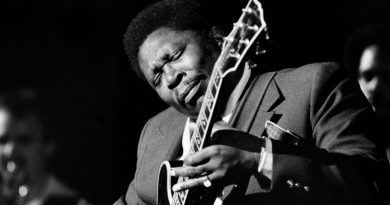
Throughout the night, King pumped out crisp, stinging guitar solo interludes on most songs. Other tunes were more dominated by his vocals. His entire set was devoid of any egotism, yet at the same time luxuriantly abundant in showmanship.
The songs he performed included various blues and R&B classics, including “Rock Me Baby,” “Why I Sing the Blues” and “Nobody Loves Me but My Mother & She Could Be Jivin’ Me Too.” For his final song of the evening, King performed his trademark, “The Thrill Is Gone.” Rather than do an encore, he stood at the edge of the stage and signed autographs for 15 minutes. During this time, the band played while two of King’s personal security people stood to his right and left. As the band played, one of the members repeatedly announced, “B.B. King, King of the Blues worldwide.”